


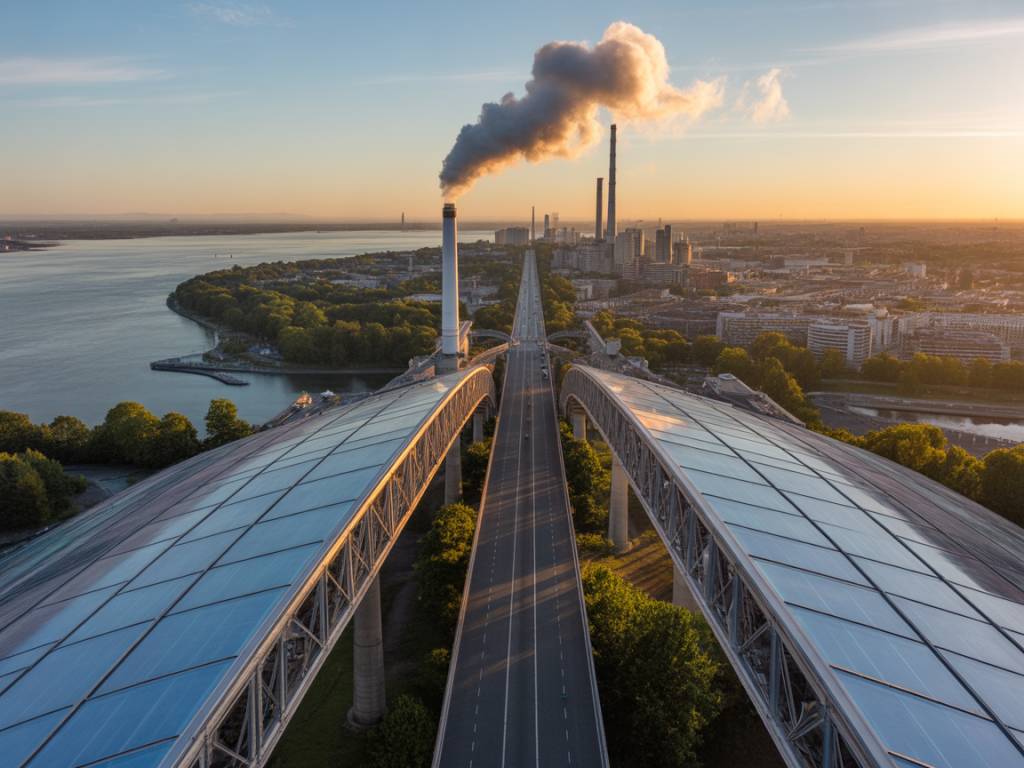
Why green industrial policy is back on the agenda
For decades, industrial policy was almost a dirty word in many Western capitals. The market, not the state, was supposed to pick the winners. That era is over. From Washington to Brussels to Beijing, governments are now openly intervening to steer investment towards low-carbon technologies.
This shift is not just about climate targets or political messaging. It is reshaping value chains, capital flows and competitive advantages across entire industries: energy, automotive, chemicals, construction, digital infrastructure and more. For businesses, the question is no longer whether green industrial policy will affect them, but how fast and how deeply.
Understanding this new landscape is essential for any company that invests, produces, hires or exports. In other words: for everyone.
What is “green industrial policy” in practice?
Behind the jargon, green industrial policy is simple: governments use public money, regulation and long-term planning to accelerate the deployment of low-carbon technologies and to build domestic industrial capacity around them.
In practice, it usually combines three levers:
- Subsidies and tax credits: to lower the cost of investing in green technologies (renewables, batteries, hydrogen, heat pumps, carbon capture, etc.).
- Regulation and standards: to create predictable demand (phase-out of combustion engines, energy performance rules for buildings, mandates for green steel or sustainable aviation fuel).
- Public procurement and infrastructure: to anchor new value chains (charging networks, hydrogen pipelines, grid modernization, green public transport).
The novelty is less the tools than their scale and the explicit goal: build competitive green industries at home, secure supply chains and create jobs, while cutting emissions in line with “net-zero by 2050” plans.
The big three: US, EU, China
Three blocs are setting the pace. Their strategies differ, but the direction of travel is similar: massive, targeted public support for green technologies.
United States – The Inflation Reduction Act (IRA)
Adopted in 2022, the IRA is the most consequential climate-industrial package in US history. It mobilizes an estimated USD 369 billion in climate and energy spending over ten years, but several analysts (including Goldman Sachs) estimate that total tax credits could exceed USD 1,000 billion if fully used.
Key features:
- Generous tax credits for clean electricity, batteries, electric vehicles, heat pumps, hydrogen and manufacturing of key components.
- “Made in America” and local content requirements in many schemes, to push companies to invest in US-based factories and supply chains.
- Long-term visibility: many credits run until at least 2032, giving investors a planning horizon rarely seen in US climate policy.
European Union – Net-Zero Industry Plan and Green Deal
The EU responded with its own mix of climate regulation and industrial incentives. The Green Deal was already ambitious; the war in Ukraine and US policies accelerated the industrial dimension.
Key pillars include:
- The Fit for 55 package: higher carbon pricing (EU ETS), stricter standards, and sectoral targets.
- The Net-Zero Industry Act: aiming for at least 40% of key clean technologies to be manufactured in the EU by 2030.
- The Carbon Border Adjustment Mechanism (CBAM): a carbon tariff on imports of carbon-intensive goods (steel, cement, aluminum, fertilizers, etc.), phased in from 2023.
- Relaxed state aid rules to allow member states to subsidize green investments more aggressively.
China – Long-term green manufacturing strategy
China has been practicing green industrial policy for over a decade, built around five-year plans and strategic sectors. It dominates the manufacturing of solar panels, batteries and many critical materials.
Key elements:
- Heavy support for domestic champions via cheap finance, land, state-owned utilities and public procurement.
- Control over upstream resources (rare earths, lithium, cobalt processing) as a strategic asset.
- Targets to reach carbon neutrality by 2060, with a peak in emissions “before 2030”, aligned with continued support for renewables and electric vehicles.
For global businesses, these three models create a new competitive triangle: US tax-driven acceleration, EU regulation-driven transformation, and China’s scale-driven manufacturing power.
How this reshapes global value chains
Green industrial policy is not an abstract macro story. It is already moving factories, contracts and jobs.
Investment is clustering where incentives are strongest
Since the adoption of the IRA, multiple European and Asian companies (in batteries, solar, hydrogen, EVs) have announced or accelerated investments in the US to capture tax credits. Similar dynamics are visible in Eastern Europe as EU funds and national subsidies push for onshoring of components for wind, solar and EVs.
Concretely, this means:
- Battery gigafactories being located near automotive clusters to minimize logistics and qualify for local-content rules.
- Electrolyzer and green hydrogen projects gravitating to regions with abundant renewables and supportive regulation.
- New mining and processing facilities in “friendly” jurisdictions to reduce geopolitical exposure.
Supply chains are becoming a strategic risk function
The era when procurement was mainly about lowest cost is fading. Companies now factor in:
- Exposure to carbon tariffs (CBAM, national carbon taxes).
- Dependence on single-source suppliers in politically sensitive countries.
- Regulatory requirements on traceability, human rights, and environmental impact across the chain.
Industrial firms in sectors like steel, cement, chemicals, automotive and electronics are already reconfiguring their supplier base to align with emerging standards and avoid future stranded assets.
Winners, losers and sectors in transition
Not all sectors are equally affected, and “green” does not automatically mean “profitable”. Understanding where value will be created—or destroyed—is crucial.
Clear beneficiaries
- Renewable energy developers and equipment makers: wind, solar, grid equipment, storage. Supportive policies and falling technology costs create robust long-term demand.
- Battery and EV manufacturers: subsidies, mandates and infrastructure (charging networks) create a structural shift away from internal combustion engines.
- Suppliers of enabling technologies: power electronics, software for grid management, digital twins, advanced materials and components.
Sectors under pressure
- Fossil fuel-based power and upstream: coal is the clearest loser, but oil and gas face the prospect of peak demand in some segments and growing policy risk.
- Carbon-intensive materials (steel, cement, aluminum, fertilizers): exposed to carbon pricing and CBAM; must invest in low-carbon processes (electric arc furnaces, green hydrogen, CCUS) to maintain market access.
- Automotive with delayed EV strategy: late movers face shrinking markets for combustion engines and regulatory bans in key geographies.
Emerging battlegrounds
Some technologies sit in a grey area, where policy choices will largely determine their fate:
- Hydrogen: competition between green (renewables-based) and blue (gas with CCS) hydrogen, and between regions to become export hubs.
- Carbon capture, utilization and storage (CCUS): highly policy-dependent, with roles in hard-to-abate sectors and possibly negative emissions.
- Nuclear and small modular reactors (SMRs): embraced in some countries as a firm low-carbon source, rejected or limited in others.
Three key risks companies cannot ignore
Green industrial policy opens opportunities, but also introduces new risks to business models.
1. Policy whiplash and political backlash
Today’s generous subsidies could be tomorrow’s budget-cutting target. Changes in political coalitions can delay or dilute support schemes. Companies that overinvest based on a single incentive program, without considering its durability, expose themselves to sudden shocks.
Mitigation: stress-test investment cases against different policy scenarios; avoid designs that only work if one tax credit remains unchanged over 15 years.
2. Trade tensions and fragmented markets
As each bloc protects its green industries, trade disputes are growing: investigations into EV subsidies, disputes over solar panel imports, debates on “friendshoring” and critical minerals. A more fragmented trade environment can increase costs and complexity.
Mitigation: diversify markets and production sites; monitor trade policy and anti-subsidy investigations as closely as climate regulation.
3. Greenwashing and compliance exposure
With more public money and stricter standards comes more scrutiny. Regulatory initiatives like the EU’s Corporate Sustainability Reporting Directive (CSRD) or anti-greenwashing rules increase legal and reputational risk for inconsistent claims.
Mitigation: align sustainability communications with robust data and third-party verification; integrate legal and compliance teams into sustainability strategy from day one.
Strategic moves for companies in the net-zero age
How can businesses navigate this evolving environment without getting lost in acronyms and shifting targets? Several practical moves emerge from the first wave of green industrial policies.
Map your exposure and opportunities
Every company should be able to answer three basic questions:
- How much of our revenue depends on high-emission products or processes exposed to carbon pricing or CBAM?
- Which parts of our portfolio directly benefit from existing or upcoming green incentives?
- Where in our value chain could modest investments unlock access to subsidies, tax breaks or preferential financing?
This requires a granular view, by geography and business line, not just a generic “sustainability” statement.
Align capex with policy signals
Capital-intensive sectors can no longer ignore policy trajectories. When deciding where to build the next plant or R&D center, companies increasingly factor in:
- Stability and clarity of local climate and energy policies.
- Access to supportive schemes (grants, tax credits, low-interest loans).
- Quality of infrastructure (grid capacity, ports, logistics).
For instance, a chemical group considering a new low-carbon hydrogen facility will compare the net cost of investment in the US (IRA credits), the EU (national subsidies and carbon pricing benefits) and Asia (lower operating costs, but less predictable regulation).
Invest in capabilities, not just assets
Green industrial policy rewards more than hardware. Companies that succeed typically build three capabilities:
- Policy intelligence: a small, competent team tracking regulatory changes, subsidies and standards across key markets.
- Partnerships: consortia with other firms, public bodies and research institutions to access funding and scale new technologies.
- Data and measurement: reliable emissions data, lifecycle assessments and energy performance metrics to meet reporting and tender requirements.
These capabilities take time to build but can generate disproportionate advantages when bidding for public contracts or accessing incentive schemes.
What this means for SMEs and mid-sized companies
Large multinationals have the resources to hire regulatory experts and lobbyists. For small and mid-sized enterprises (SMEs), the challenge is different: how to tap into opportunities without being overwhelmed.
Several practical routes exist:
- Leverage local clusters and industry associations that centralize information on funding programs, training and regulatory changes.
- Focus on niches: specialized components for heat pumps, software for energy management, retrofitting services for buildings, maintenance for renewable assets.
- Use customer demand as a guide: many large clients now include emissions and sustainability criteria in tenders; aligning with these requirements is often the fastest path to capturing green industrial policy indirectly.
In many countries, the most dynamic job creation linked to the green transition happens in services and SMEs that supply larger industrial players: installers, engineering firms, logistics providers, digital solutions.
From compliance to competitive strategy
For years, many companies treated climate and energy regulation as a compliance issue: something to report on, minimize costs, and move on. Green industrial policy changes the equation. It transforms climate action into a matter of industrial competitiveness and national security.
In this context, the most resilient businesses are those that:
- Anticipate regulatory shifts instead of waiting for final rules.
- Use public incentives as a lever to de-risk innovation and accelerate low-carbon investments they would eventually have to make anyway.
- Engage in transparent dialogue with policymakers and local communities, not to capture policy, but to align industrial projects with real needs on the ground.
Companies that remain on the sidelines risk facing a double penalty: shrinking markets for their legacy products and limited access to support mechanisms that could finance their transition.
The rise of green industrial policy is not a temporary trend or a niche concern for “sustainability teams”. It is rapidly becoming a core driver of where capital goes, where factories are built, and which technologies scale. In the net-zero age, understanding and integrating this new policy environment is no longer optional for business leaders—it is a strategic imperative.