 Bastien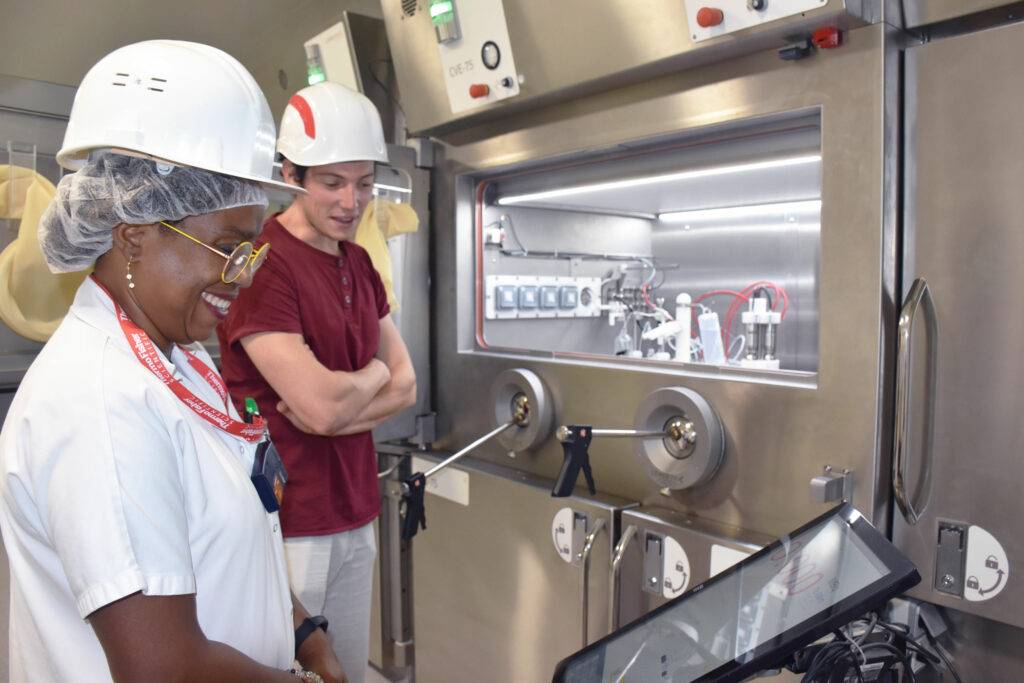
In hospitals around the world, radiation is both a powerful diagnostic and therapeutic tool and a potential source of risk for patients and staff. How to maximize clinical benefits while minimizing exposure has become a strategic question for healthcare facilities. This is where high-performance radiation protection solutions make a decisive difference – not only in safety, but also in efficiency, ergonomics and regulatory compliance.
For more than half a century, the French company Lemer Pax has specialized in shielding humans from ionizing radiation. From nuclear medicine departments to interventional cardiology suites, its devices are now used on five continents. By rethinking how radiological protection is designed and integrated into care pathways, Lemer Pax solutions help hospitals optimize both safety standards and operational performance.
A pioneer in radiation protection born from lead expertise
Founded in 1970 near Nantes, western France, Lemer Pax first built its reputation on a deep knowledge of lead working – the historical material of choice for radiation shielding. Over the decades, this industrial know-how has evolved into a global radioprotection expertise, encompassing materials science, mechanical design, nuclear physics and human factors engineering.
Today, the company positions itself as a world leader in radiation protection innovation. Its activities are structured around four key sectors:
- Medical: equipment for nuclear medicine, interventional cardiology and other imaging specialties
- Research: shielding solutions for laboratories and large scientific infrastructures
- Industry: protection for non-destructive testing, radiography and complex industrial processes
- Civil nuclear: solutions supporting fuel cycle, waste management and nuclear installations
The motto “Protecting Life” summarizes this mission: designing, developing and manufacturing advanced solutions that place human safety at the center, without sacrificing clinical performance or industrial productivity.
Radiation protection, a strategic challenge for hospitals
In the medical field, radiation protection is no longer just a compliance issue. It has become a key component of hospital risk management, workforce protection and quality of care. Nuclear medicine departments are handling increasing volumes of radiopharmaceuticals, while interventional cardiologists and radiologists are performing longer and more complex image-guided procedures.
Hospitals face several converging challenges:
- Protecting staff from chronic low-dose exposure during repeated procedures
- Ensuring patient safety while delivering diagnostic and therapeutic doses
- Maintaining high throughput in busy departments without compromising safety protocols
- Complying with increasingly stringent national and international regulations
- Attracting and retaining specialized staff sensitive to occupational risks
In this context, radiation protection is no longer perceived as a static set of barriers and lead aprons, but as an integrated system. Lemer Pax has positioned itself precisely at this interface, developing solutions that protect while improving workflows and working conditions.
Shielded injectors: securing radiopharmaceutical administration
One of the pivotal moments in a nuclear medicine examination is the injection of radiopharmaceuticals into the patient. This phase exposes nurses and technologists to repeated, cumulative doses. Lemer Pax has designed shielded injectors that surround syringes and vials with high-performance protection, drastically reducing hands and torso exposure.
These injectors contribute to optimized radiation protection in several ways:
- Significant dose reduction to staff: shielding materials are engineered to stop a large percentage of emitted radiation while keeping devices compact and maneuverable.
- Improved injection accuracy: ergonomic grips and clear visual access to the syringe ensure precise administration, even in stressful environments.
- Standardization of practices: by providing a structured injection system, hospitals can harmonize procedures, limit variability and reduce the risk of handling errors.
- Better staff acceptance: lighter, more ergonomic injectors encourage systematic use, a crucial factor for long-term radioprotection.
For institutions seeking to reduce occupational exposure indicators, shielded injectors are a direct and measurable lever of improvement.
Preparation enclosures: safer radiopharmaceutical compounding
Upstream of injection, radiopharmaceutical preparation is another critical phase. It requires a delicate balance: allowing precise manipulation of radioactive products while isolating operators from emissions. Lemer Pax designs enclosures dedicated to this step, combining shielding performance, air treatment and optimized ergonomics.
These enclosures bring several benefits to hospital nuclear medicine departments:
- Comprehensive containment of radiopharmaceuticals during dilution, fractionation and labeling operations
- Integration with hot labs and pharmacy environments, respecting both radiological and pharmaceutical standards
- Facilitated cleaning and decontamination thanks to smooth surfaces and carefully designed interiors
- Visual comfort for operators, with large shielded viewports and lighting designed to limit fatigue
By structuring radiopharmaceutical preparation in a dedicated, shielded environment, hospitals can better document practices, trace operations and demonstrate compliance to regulators and accreditation bodies.
Mobile shields: flexible protection in dynamic care environments
In both nuclear medicine and interventional cardiology, clinical practice requires mobility. Patients move between rooms, emergency procedures disrupt planned schedules, and multidisciplinary teams converge in tight spaces. In this dynamic environment, fixed shielding is not enough to guarantee optimal protection.
Lemer Pax has therefore developed a wide range of mobile screens and shields that can be easily moved and adjusted around the patient and equipment. These mobile barriers offer:
- Adaptable protection to different room configurations and procedural setups
- Fast deployment to respond to urgent or unplanned situations
- Optimized ergonomics with handles, wheels and counterbalanced systems designed for daily, intensive use
- Compatibility with imaging, ensuring shields do not interfere with image quality or access to the patient
For hospitals renovating their imaging suites or introducing new hybrid operating rooms, these mobile solutions represent a flexible way to raise the level of radiation protection without undertaking heavy structural work.
Midway between industrial robustness and clinical finesse, devices from Lemer Pax are designed to integrate discreetly into care areas while providing visible, tangible protection for teams.
Interventional cardiology: protecting teams during complex procedures
Among the hospital specialties most concerned by radiation exposure, interventional cardiology has become emblematic. Long procedures, high fluoroscopy times and proximity to the X-ray source expose cardiologists and staff to repeated doses throughout their careers.
Lemer Pax has progressively adapted its medical portfolio to the specific constraints of cath labs and hybrid operating rooms. The company offers, for example:
- Ceiling-suspended shields and floor-mounted barriers specifically shaped for cardiac procedures
- Screens designed to protect the head, neck and torso of operators, who often stand close to the radiation field
- Ergonomic solutions that maintain free access to vascular access sites and emergency equipment
The objective is two-fold: to reduce cumulative doses to operators without lengthening procedure time or compromising access to the patient. In practice, feedback from some centers shows that optimized shielding can also reduce reliance on heavy personal lead aprons, with a positive impact on musculoskeletal disorders among staff.
Innovation and eco-designed materials at the core
Radiation protection is often associated with lead, a dense but toxic material. One of the strong axes of Lemer Pax’s strategy is the development of ecological alternatives with equivalent or superior performance. The company invests heavily in research and development of lead-free high-performance alloys, combining radiological efficiency, durability and reduced environmental impact.
With more than 80 patents filed internationally, its portfolio testifies to a sustained innovation effort, which covers:
- New shielding materials, lighter and more environmentally friendly
- Mechanical and optical systems improving ergonomics and visibility
- Advanced interfaces facilitating maintenance, decontamination and lifecycle management
This approach resonates with the growing expectations of hospitals regarding CSR (Corporate Social Responsibility). By choosing eco-designed radioprotection solutions, healthcare facilities can not only protect their teams but also reduce their environmental footprint and better manage end-of-life disposal of shielding devices.
From design to clinical use: integrating radioprotection into workflows
One of the specificities of Lemer Pax lies in its co-development approach with the medical community. The company collaborates closely with academic experts and clinicians to ensure that each solution responds to real-world constraints of care settings.
This translates into several practical advantages for hospitals:
- Devices tailored to clinical pathways, from patient reception to discharge, without creating bottlenecks
- Attention to user comfort: handles, heights, visibility and maneuverability designed for teams often working under pressure
- Support with installation and training, to ensure rapid adoption and consistent use of equipment
- Documentation and regulatory support that help radiation protection officers and medical physicists demonstrate compliance
Radiation protection becomes an integrated component of care processes rather than a constraint added at the last minute. For hospital management, this means fewer operational trade-offs between safety and productivity.
Quality, certification and global reach
In a field as sensitive as radioprotection, quality and traceability are non-negotiable. Lemer Pax operates under some of the most demanding international standards, guaranteeing that its products meet applicable regulations in both the medical and nuclear sectors.
With over 140 employees and a significant share of revenue generated through exports, the company has gradually built a global footprint. Its solutions are deployed on five continents, in contexts as varied as university hospitals, regional clinics, research labs and large industrial sites.
The inauguration in 2024 of its new headquarters and industrial site, “Le Monarch” in Carquefou, marks a further step in this development. This next-generation facility brings together design, production and administrative teams under one roof, facilitating collaboration and shortening development cycles for new products.
For hospitals, this industrial base is a guarantee of capacity, reliability and long-term support in maintaining and upgrading radioprotection solutions.
Beyond healthcare: synergies with research and major scientific projects
While the primary focus of Lemer Pax in hospitals is to protect staff and patients, its involvement in large-scale scientific projects also feeds back into medical innovation. The company contributes, for example, to research on dark matter and other cutting-edge physics programs, where extreme shielding performance is essential.
These collaborations expose its engineering teams to some of the most demanding environments and specifications in the world. The resulting advances in materials, design and manufacturing can then be transferred to the healthcare sector, in the form of better-performing, more compact and more ergonomic devices.
This virtuous loop between research, industry and medicine illustrates how radioprotection, often perceived as a niche discipline, is in fact at the crossroads of strategic scientific and societal challenges.
Raising the standard of hospital radiation protection
As imaging and interventional techniques continue to expand, hospitals will have to manage ever more complex exposure scenarios. Simple compliance with minimum regulatory requirements will increasingly appear insufficient, both in terms of occupational health and patient expectations of safety.
By combining materials science, ergonomics, engineering and clinical collaboration, Lemer Pax has positioned its solutions as enablers of this new generation of radioprotection. Shielded injectors, preparation enclosures and mobile shields contribute to:
- Reducing occupational doses for staff in nuclear medicine and interventional cardiology
- Structuring safer and more traceable workflows around radiopharmaceuticals
- Improving working conditions and reducing physical strain from heavy personal protection
- Supporting hospitals in their efforts to comply with, and often exceed, regulatory standards
- Aligning safety strategies with broader environmental and CSR objectives
Far from being limited to technical details, radiation protection thus becomes a component of hospital excellence. For institutions that see safety, quality and innovation as drivers of their attractiveness and performance, the integration of advanced shielding solutions is now a strategic choice.
In this transformation, companies specializing in radioprotection play a key role. By constantly pushing the technological frontier and staying close to clinicians’ needs, they help make optimized radiation protection not an exception reserved for a handful of flagship centers, but a standard accessible to hospitals across the globe.