 Bastien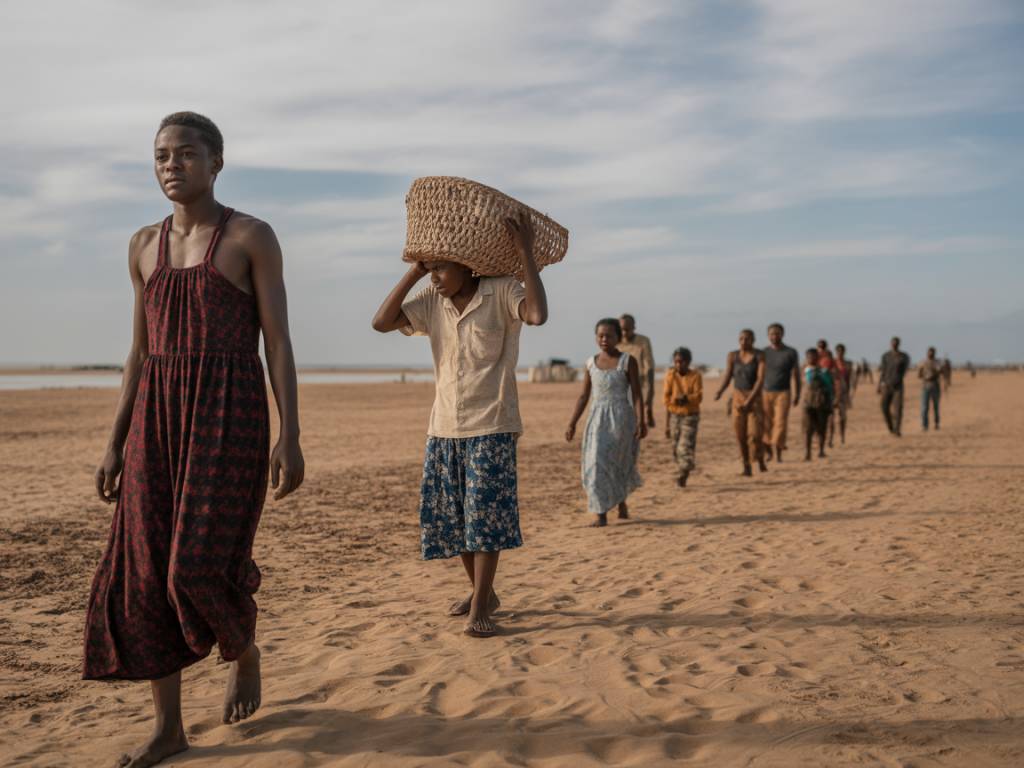
Coastal villages that slip into the sea. Farmers who abandon their land after the third failed harvest. Families who move not because they want a better life, but because staying put has become impossible. Climate migration is no longer a scenario for 2050 – it is already reshaping borders, economies and political agendas today.
Yet most of these movements remain “quiet” in public debate. They are dispersed, often internal, rarely labelled as climate-driven. No dramatic mass exodus, but a steady rerouting of human lives that, taken together, is starting to redraw the world map – and stretching international solidarity to its limits.
Climate migration: what are we really talking about?
There is no official legal category for a “climate migrant” or “climate refugee”. That absence is not a detail; it shapes how people are (or aren’t) protected.
In practice, climate-driven mobility typically takes several forms:
- Sudden displacement after a disaster: floods in Pakistan, hurricanes in the Caribbean, wildfires in California or Greece.
- Slow-onset migration as livelihoods collapse: desertification in the Sahel, salinization of farmland in Bangladesh, glacier melt in the Andes.
- Planned relocation of entire communities: Pacific islands elevating land or preparing for partial resettlement, Alaskan villages moving inland.
- Urban drift from rural regions that can no longer sustain agriculture, fishing or pastoralism.
The International Organization for Migration (IOM) estimates that by 2050, anywhere from 25 million to 1 billion people could be displaced by environmental changes, depending on scenarios and methodology. The World Bank, in its “Groundswell” reports, advances a central estimate of 216 million internal climate migrants by 2050 across Latin America, Sub-Saharan Africa and South Asia alone.
Most of these people will move within their own country. But even internal shifts on that scale can transform political balances, strain cities and change where investment makes sense.
How the world map is being quietly redrawn
The map is not being redrawn through new borders, but through new habitability patterns: zones people leave, zones they transit through, zones they concentrate in. Several major trends are emerging.
1. Coastal retreat and the rise of “climate frontiers”
Low-lying coastal regions are on the frontline. In Bangladesh, Vietnam, parts of India and small island states, sea-level rise combines with storms and erosion to make life increasingly precarious. The World Bank estimates that in Bangladesh, up to 13 million people could be internally displaced by climate impacts by 2050, many from coastal districts.
Some regions, in contrast, begin to look like relative “climate havens” – higher latitude or higher altitude areas less exposed to extreme heat or sea-level rise, at least in the short to medium term. Northern Europe, parts of Canada or the northern US, southern Chile or New Zealand are often cited in this category. That does not mean they are safe, only that they may remain comparatively more livable and thus attractive.
2. Rural exodus 2.0
Rural exodus is not new, but climate stress accelerates it and changes its geography. In the Sahel, recurring droughts are undermining pastoral and agricultural livelihoods. In West Africa, cities like Bamako, Niamey or Ouagadougou absorb an influx of people who no longer see a viable future in the countryside.
These internal flows rarely make headlines. But they change electoral maps, infrastructure needs and local labour markets – and they increase the pressure on already fragile urban systems (water, housing, waste, transport).
3. Cross-border pressures and “mixed” migration
When farmers leave Central America after years of drought and failed harvests, are they “economic migrants”, “climate migrants”, victims of trade policy or of national governance failures? The honest answer is: all of the above.
On the Guatemala–Mexico–US route, climate stress acts as a threat multiplier. It pushes already vulnerable households over the edge, adding to violence, poverty and institutional weakness. For destination countries, this creates a challenge: how to respond to flows that are neither classic asylum cases nor purely voluntary labour migration?
Three concrete theatres of climate-driven movement
To grasp the scale and complexity of this “quiet redrawing”, it helps to zoom in on a few emblematic regions.
Bangladesh: living with the water
Bangladesh sits at the confluence of major rivers and the Bay of Bengal. It is densely populated, low-lying and highly exposed to cyclones and floods. Saline intrusion from rising seas and upstream water management is pushing farmers to abandon rice for shrimp, or to leave altogether.
Dhaka, the capital, grows by several hundred thousand people per year. Not all are moving because of climate, but for a significant share, environmental stress is part of the story. The government experiments with adaptation – early warning systems, cyclone shelters, embankments, attempts at climate-resilient crops – yet the reality is that some areas are becoming progressively harder to inhabit.
For international business, this matters beyond humanitarian concern. Bangladesh is a major node in global textile and garment supply chains. Disruption of its workforce and infrastructure has direct consequences for brands, logistics operators and investors.
The Sahel: climate, conflict and fragile states
The Sahel illustrates how climate interacts with security and politics. Rising temperatures, erratic rainfall and advancing desertification affect pastoral routes and farming calendars. Tensions over land and water flare up, often along ethnic lines, in contexts where state presence is weak and armed groups are active.
Displacement there is often internal or to neighbouring countries: Niger, Burkina Faso, Mali, Chad and beyond. According to the UN, the Central Sahel has seen millions uprooted in the last decade, with climate stress as one of several underlying drivers.
European policymakers worry about longer-distance migration to the EU. But from the perspective of local communities, the more immediate issue is the destabilisation of regional economies and food systems, which also undermines any prospect of private investment or long-term projects.
United States: internal migration and the new risk geography
Climate migration is not confined to the Global South. In the US, internal movements linked to wildfire risk, hurricanes, sea-level rise and chronic heat are increasingly documented.
After Hurricane Katrina, around a million people were displaced; many never returned to New Orleans. In recent years, repeated flooding in parts of Louisiana, Florida or North Carolina and wildfire seasons in California have prompted growing numbers to relocate to what they perceive as safer states or cities.
Real estate markets are slowly pricing in these risks: insurance premiums soar in high-risk zones, while some “climate-resilient” cities in the north-east or midwest see rising demand. For local governments, this triggers uncomfortable questions about zoning, infrastructure and fiscal sustainability: who pays to protect or rebuild at-risk communities, and for how long?
The legal vacuum: climate migrants without a status
Under the 1951 Refugee Convention, a refugee is someone who flees persecution based on race, religion, nationality, membership of a particular social group or political opinion. Climate does not appear in this definition. Nor does “generalised environmental degradation”.
As a result:
- People displaced by climate impacts do not have an automatic right to protection when they cross a border.
- Most are treated under standard immigration or labour laws, with no specific safeguards.
- Asylum systems, already under pressure, are not designed to accommodate slow-onset environmental displacement.
There are signs of movement. In 2020, the UN Human Rights Committee ruled that it may be unlawful for states to deport people to countries where climate change poses an immediate threat to their lives. Some states (New Zealand, for example) have explored ad hoc solutions for Pacific islanders. The Global Compact for Safe, Orderly and Regular Migration, adopted in 2018, explicitly references climate and environmental drivers.
But these are fragments, not a coherent regime. The political stakes are obvious: acknowledging “climate refugees” in law could open the door to obligations that many governments are reluctant to assume.
Economic impacts: who pays, who benefits?
Mobility is often portrayed as a failure. In reality, it can be a form of adaptation – sometimes the only realistic one. From an economic perspective, climate migration creates both costs and opportunities, highly unevenly distributed.
Costs for origin regions
- Loss of labour and skills in already fragile local economies, accelerating decline.
- Stranded assets: homes, farms, infrastructure that lose value or become unusable.
- Erosion of tax base for small municipalities, just as they face rising climate damage.
Pressures and potential gains for destination regions
- Short-term strain on housing, schools, health and transport when inflows are sudden or poorly planned.
- Labour market adjustment: newcomers may fill shortages in construction, care, agriculture or services.
- Innovation in infrastructure: incentive to invest in resilient housing, cooling, water management and green mobility.
For businesses, the question is not whether climate migration will happen, but how it will reshape markets and supply chains. Insurance, real estate, construction, agribusiness, logistics, digital infrastructure: many sectors will have to integrate shifting population maps into their strategies.
A stress test for international solidarity – and for politics
Climate migration is a mirror held up to the global system. Those who have contributed least to greenhouse gas emissions are often among the most exposed. Yet they rarely have the means to adapt in place, let alone to move safely and with dignity.
This raises several political fault lines.
North–South tensions over responsibility
Many developing countries argue that climate mobility is a direct consequence of historical emissions from industrialised economies. They call for:
- More climate finance for adaptation, not just mitigation.
- Funding for loss and damage – the irreversible impacts of climate change that cannot be adapted to.
- Support for orderly migration pathways as part of a broader climate justice agenda.
At recent UN climate conferences, debates around a dedicated Loss and Damage Fund have become central. Pledges exist, but disbursement is slow and volumes remain far below estimated needs.
Domestic politics and the migration backlash
In destination countries, climate rarely appears explicitly in migration debates. Voters see boats in the Mediterranean or caravans at the US–Mexico border, not the cumulative effects of droughts, floods and failed harvests thousands of kilometres away.
Yet climate acts as a background amplifier. The risk is clear: if receiving societies respond primarily with deterrence and securitisation, without addressing root causes or planning for inevitable mobility, pressure will build on both sides – in origin regions and at borders.
From reactive to proactive: what can be done now?
Waiting for a perfectly calibrated international regime would be a mistake. Governments, businesses and cities already have room to move from improvisation to anticipation.
1. Invest in adaptation where people live today
Every dollar spent to make communities more resilient can delay or reduce forced displacement. That includes:
- Climate-resilient agriculture (drought-resistant seeds, improved irrigation, agroforestry).
- Flood defences and early warning systems for storms and heatwaves.
- Urban planning that anticipates informal settlement growth rather than denying it.
For businesses, supporting such investments in key sourcing regions is not philanthropy; it is supply chain risk management.
2. Acknowledge mobility as part of adaptation strategies
National and local climate plans often call for “resilience” without spelling out what happens when some areas become structurally unviable. Integrating mobility means:
- Identifying regions where voluntary relocation will likely be needed in the coming decades.
- Ensuring receiving areas have the infrastructure and services to absorb newcomers.
- Providing legal channels and financial support for planned moves, rather than waiting for emergencies.
Some Pacific island states are already negotiating labour mobility schemes with New Zealand and Australia, explicitly framed as climate adaptation tools.
3. Experiment with new legal and financial tools
Options under discussion or partial implementation include:
- Humanitarian visas or temporary protection for people fleeing climate disasters.
- Regional agreements that allow for free movement in response to environmental stress.
- Insurance and risk-pooling mechanisms for communities facing relocation.
The private sector can play a role, for instance through parametric insurance, innovative housing finance or public–private partnerships for resettlement infrastructure, provided safeguards are in place to avoid new forms of exclusion or debt traps.
4. Use data to plan, not to procrastinate
Satellite imagery, climate models, demographic projections and mobile phone data can help anticipate where pressure points will emerge. Several research groups now produce “climate migration maps” at regional or national scale.
The temptation is to treat these as distant scenarios. A more useful approach is to translate them into concrete questions for the next 5–10 years: Which coastal neighbourhoods will require new drainage or buyout programmes? Which mid-sized cities will need schools, hospitals and housing upgrades? Which roads or ports risk becoming stranded assets?
Why this matters now for decision-makers and businesses
For corporate boards, mayors, investors or policymakers, climate migration can seem abstract compared to quarterly results or electoral cycles. Yet decisions taken today on where to build, where to source, what to insure and whom to train will lock in exposure for decades.
Some practical starting points:
- Map your exposure: identify assets, suppliers and customers in high-risk zones for heat, floods, storms or sea-level rise. Overlay with projected population movements.
- Engage with local authorities in both origin and destination regions to understand their adaptation and mobility plans – or their lack thereof.
- Develop workforce strategies that anticipate mobility: remote work options, relocation support, training for new arrivals in receiving regions.
- Integrate social licence considerations: projects that are blind to local displacement dynamics risk reputational and regulatory backlash.
For public authorities, the core challenge is to move beyond emergency-driven responses. That means aligning climate policy, urban planning, labour market strategies and migration governance instead of treating them as separate silos.
Climate migration is not a distant avalanche waiting to crash; it is a tide that has already started to rise. The question for states, cities and companies is not whether they can stop it, but whether they can channel it in ways that minimise chaos and maximise dignity and opportunity.
A world on the move is not automatically a world in crisis. Handled with foresight, resources and a degree of courage, the coming decades of climate-driven mobility could also push us toward more honest conversations about responsibility, borders and shared interests. Ignoring it will not keep people from moving. It will only make every move harder, riskier and more politically explosive when it finally becomes impossible to look away.