


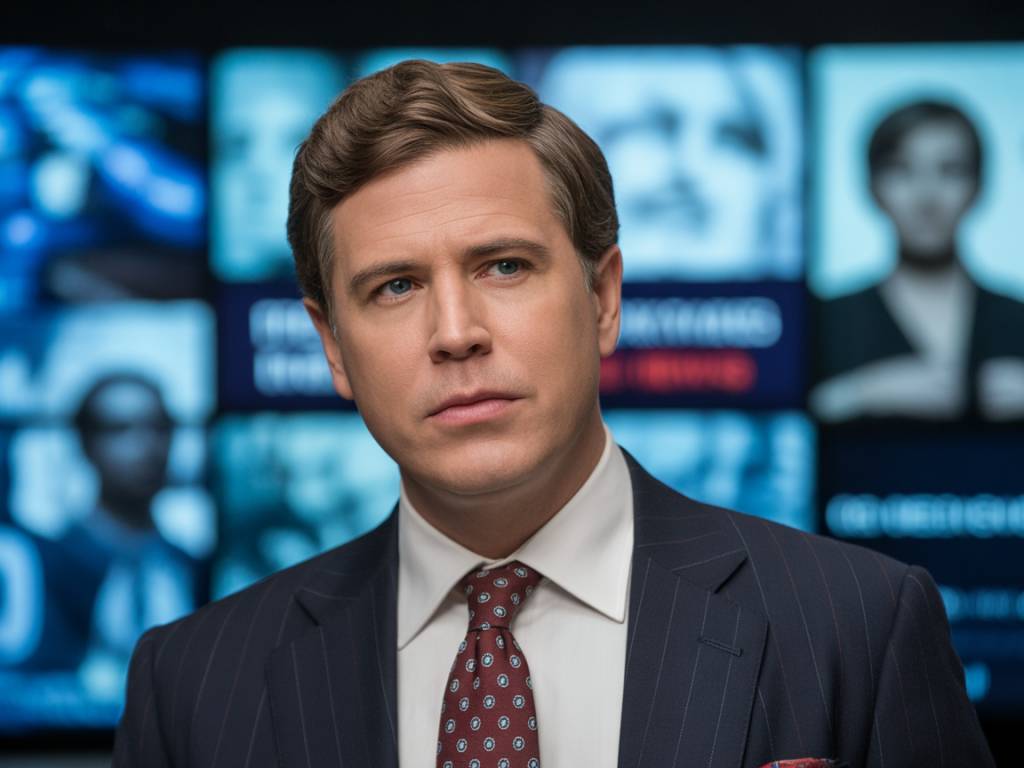
In a few years, synthetic media has gone from amusing face-swap apps to a strategic tool in politics, business and culture. The same technology that allows you to put your face on a movie clip can also fabricate a speech by a head of state, generate an entirely fake CEO or create a luxury brand campaign without a single human model.
For leaders, marketers and policymakers, the question is no longer whether deepfakes will impact their activities, but how fast – and on what terrain they must prepare.
What deepfakes really are (and why quality is no longer the main issue)
Technically, a deepfake is a piece of synthetic media generated or heavily modified by AI models, usually deep learning-based. Practically, the term now covers:
-
Face swapping: replacing a person’s face with another in a video or image.
-
Voice cloning: reproducing a person’s voice from a few seconds of audio.
-
Full-body avatars: generating “digital humans” speaking, moving and reacting in real time.
-
Script-to-video tools: turning a text prompt into a synthetic video, with AI-generated actors and voice-over.
Until recently, the key barrier was realism. That barrier is disappearing. In 2018, research by Nvidia showed progress in generating human faces that most viewers could not distinguish from real photos. Since then, commercial tools have turned this into one-click services, and large language models now provide believable scripts on demand.
Quality is still progressing, but the real tipping point lies elsewhere: cost and scale. Creating high-quality synthetic media now costs a fraction of a professional video shoot, and can be produced in minutes. That changes the economics of persuasion, propaganda and content marketing.
Politics: from disinformation risk to campaign tool
Most public debates about deepfakes in politics focus on disinformation – and for good reason.
In 2024, dozens of countries held elections while voice-cloning and video-generation tools became freely accessible. We have already seen:
-
Fake campaign calls and audios: in several countries, audio clips mimicking political leaders circulated on messaging apps to discourage voting or spread false statements.
-
Fabricated speeches and “leaks”: doctored videos showing officials allegedly admitting corruption or announcing unpopular measures.
-
Targeted micro-disinformation: content tailored to specific language groups or regions, using synthetic voices that sound local and trustworthy.
The impact is not only what people believe, but what they no longer believe. When “anything can be fake”, political actors can exploit plausible deniability: a real recording can be dismissed as a deepfake. This is the so-called “liar’s dividend”.
Yet synthetic media is not only a weapon for bad actors. Political organisations are also using it in more proactive, sometimes legitimate ways:
-
Multilingual campaigning: one leader, dozens of languages. AI voice cloning allows a candidate to “speak” fluently in languages they do not know, reaching diasporas or minority communities at low cost.
-
Personalised messaging: using generative video to adapt examples, tone and references to different audiences without reshooting.
-
Rapid response content: creating short videos or explainers within hours when a news story breaks, instead of waiting for a full production cycle.
Regulators are starting to react. The European Union’s AI Act, US draft rules on political ads, and local electoral commissions in countries like India or Brazil all move toward some combination of:
-
Mandatory disclosure labels for AI-generated political content.
-
Restrictions on impersonating real individuals in campaign materials.
-
Obligations for platforms to detect and demote harmful synthetic media.
For political parties and public institutions, a few operational implications emerge:
-
Prepare “authenticity protocols”: how do you prove, quickly, that a piece of content is fake (or real)? This involves digital signatures, watermarking, and pre-agreed response playbooks.
-
Invest in media literacy: not as a slogan, but as concrete training for campaign teams, journalists and citizens on how deepfakes look and circulate.
-
Monitor fringe channels: many deepfake operations start on encrypted or niche platforms before jumping to mainstream networks.
Business: between productivity gains and brand risks
In the corporate world, deepfakes and synthetic media raise two main questions: how can they help operations and marketing, and how can they hurt brands and finances?
Productivity and new formats for marketing and training
On the positive side, synthetic media is becoming another layer of marketing automation. Typical use cases include:
-
Scalable video content: companies use AI presenters to produce hundreds of product tutorials, onboarding videos or FAQs in multiple languages, at a cost comparable to writing a blog post.
-
Personalised sales outreach: some B2B teams experiment with semi-personalised video messages, where an AI avatar “says” the prospect’s name and adapts a few key lines based on industry or role.
-
Internal communication and training: HR and L&D teams generate scenario-based videos for compliance, cybersecurity or safety, adjusting scripts rapidly when regulations change.
One European e-commerce company, for instance, reported cutting its product video production time by more than 70% by moving to AI-generated presenters. Instead of coordinating shoots, translations and post-production, it now updates scripts directly in a web interface.
In parallel, entirely synthetic influencers and brand ambassadors are emerging. Virtual models sign contracts with fashion labels, appear on billboards and interact with followers on social networks. For brands, this means:
-
More control over image, schedule and messaging.
-
Fewer reputation risks than with human influencers exposed to personal scandals.
-
New creative possibilities (fantasy worlds, impossible settings, ageless characters).
But this also raises uncomfortable questions: what does it mean to build customer trust around a face or voice that does not exist?
Fraud, impersonation and the “CEO voice” problem
On the risk side, finance teams and CISOs are already seeing concrete fallout from voice and video deepfakes. Notable cases include:
-
CEO fraud by voice cloning: in several incidents reported by insurers and regulators, employees received a call from a voice sounding exactly like their CEO or CFO, instructing them to authorise urgent transfers. Losses reached millions of euros in some cases.
-
Fake vendor or client meetings: video-conferencing tools make it feasible to simulate a known contact using a real-time avatar and cloned voice, especially when connection quality is poor.
-
Brand damage via synthetic scandal: a fabricated video of a company executive making offensive remarks can go viral before fact-checkers intervene.
Deepfake-driven fraud is rising fast enough that major insurers now offer dedicated coverage and ask detailed questions about companies’ controls. Traditional “call-back” procedures or email verifications are no longer sufficient when the attacker can convincingly mimic both voice and writing style.
Operational responses that companies are starting to implement include:
-
Multi-channel verification for high-value transactions (one secure app + one independent channel, not just a phone call).
-
Code word or passphrase systems for sensitive instructions involving executives.
-
Clear internal rules: “No urgent transfer or contract change based solely on audio or video instructions, whatever the apparent source.”
-
Dedicated incident playbooks to respond to viral deepfake attacks on brand reputation.
The broader lesson: as synthetic media becomes trivial to produce, companies need to treat voice and image as compromised identifiers, just like passwords after a data breach.
Culture and entertainment: synthetic stars and new forms of creativity
In media and culture, synthetic content does not only imitate reality; it also creates formats that would not exist otherwise.
Streaming platforms can already test AI-generated trailers and thumbnails tuned to viewers’ preferences. Music producers use voice models of popular singers to prototype songs before approaching them – or, in some controversial underground scenes, to release “unofficial” tracks in a star’s synthetic voice.
In cinema and TV, studios experiment with “digital doubles” to de-age actors, recreate deceased performers or localise performances. Instead of re-dubbing an entire series, a synthetic system can adapt lip movements and voices to match each language.
At the same time, individuals with no prior access to the industry are producing mini-films, animated clips and virtual performances entirely generated by AI. Barriers to entry are falling fast, which tends to have two effects:
-
Explosion of quantity: more content, more experiments, more noise.
-
Reconfiguration of value: in a world where images and sounds are cheap to generate, curation, narrative coherence and authenticity signals become premium assets.
The legal and ethical frameworks, however, lag behind. Key tensions include:
-
Right to publicity and likeness: can a studio or platform reuse an actor’s digital double for new productions decades after the original contract?
-
Consent and compensation: should artists be paid when their style, voice or image trains a model that then generates new content without their involvement?
-
Fan creations vs. commercial exploitation: how far can “fan-made” synthetic songs or videos go before they infringe on rights?
Unions in Hollywood and music industries are already negotiating clauses about AI usage. For example, specifying that any digital replica requires explicit consent, additional payment and limits on scope. European regulations on AI-generated content and copyright will further shape this terrain in the coming years.
The “reality gap”: trust, verification and new infrastructure
Across politics, business and culture, synthetic media accelerates a deeper shift: the decoupling of what we see and hear from what actually happened.
This creates a structural challenge for democracies, markets and social life, all of which rely on some baseline of shared reality. To address it, technical and institutional layers are emerging:
-
Content provenance standards (such as the C2PA initiative), embedding cryptographic metadata into images and videos at the time of capture, indicating the device, time, and any edits.
-
Watermarking for AI outputs, making it easier for platforms and tools to identify synthetic content, even after basic transformations.
-
Third-party verification services that certify key corporate or political communications, similar to financial auditing.
However, no technical solution is bulletproof. Attackers can strip metadata, compress files or screen-record content. In parallel, the human and organisational layer remains critical:
-
Newsrooms must adapt verification protocols to handle synthetic threats at scale.
-
Companies need crisis communication strategies that assume realistic fake videos will emerge at some point.
-
Citizens require habits of “context checking” rather than solely “image checking”. Who benefits from this content? Where did it first appear? Does it match other reliable sources?
Deepfakes do not abolish truth; they raise the cost of establishing it. Actors who can systematise verification, quickly and visibly, will have a competitive advantage in credibility.
Strategic recommendations for businesses and institutions
For organisations wondering where to start, a pragmatic roadmap can be sketched in three layers: use, protect, govern.
1. Use: identify high-value, low-risk applications
-
Map your content needs: training, customer support, marketing, internal communication.
-
Test synthetic media first on non-sensitive, clearly labelled content (e.g. generic tutorials, FAQs).
-
Measure productivity gains in time and budget versus traditional production.
-
Keep a human in the loop for editorial oversight, especially on regulated topics.
2. Protect: adapt security and reputation management
-
Update fraud prevention policies to consider voice and video as non-trustworthy identifiers.
-
Implement multi-factor verification for sensitive decisions and transactions.
-
Train employees to recognise common deepfake scenarios (CEO fraud, fake vendor calls, synthetic press requests).
-
Prepare a response plan for synthetic reputational attacks: monitoring, rapid debunking, legal actions if necessary.
3. Govern: define internal rules and external positioning
-
Establish clear guidelines on AI-generated content: what is allowed, under what conditions, with what disclosure.
-
Clarify how you handle customer and employee data in training models or creating avatars.
-
Coordinate legal, IT, communication and HR functions around synthetic media issues rather than treating them as a purely technical matter.
-
Position your brand on transparency: many customers will increasingly value companies that explicitly signal when content is synthetic.
The organisations that will navigate deepfakes best are not necessarily those with the most advanced algorithms, but those that integrate these technologies into coherent strategies, with clear guardrails.
From disruption to new normal
Synthetic media and deepfakes are often presented as an anomaly in the information ecosystem, a kind of temporary disturbance before we “fix” the problem with better detection tools. A more realistic view is to consider them as a durable layer of our digital environment.
Images, voices and videos are becoming as editable and generative as text. The unit cost of producing persuasive media is collapsing. This does not automatically lead to chaos; it leads to fierce competition for attention and trust.
For political actors, the priority is to maintain electoral integrity and institutional credibility in a world where fakes are cheap. For businesses, the challenge is to harness productivity and creative gains without opening the door to fraud and brand erosion. For creators and cultural industries, the task is to redefine value when “looking real” is no longer a differentiator.
The gap between perception and reality is widening. Filling that gap with robust processes, transparent communication and thoughtful regulation is likely to become one of the central strategic issues of the next decade – for governments, companies and citizens alike.