


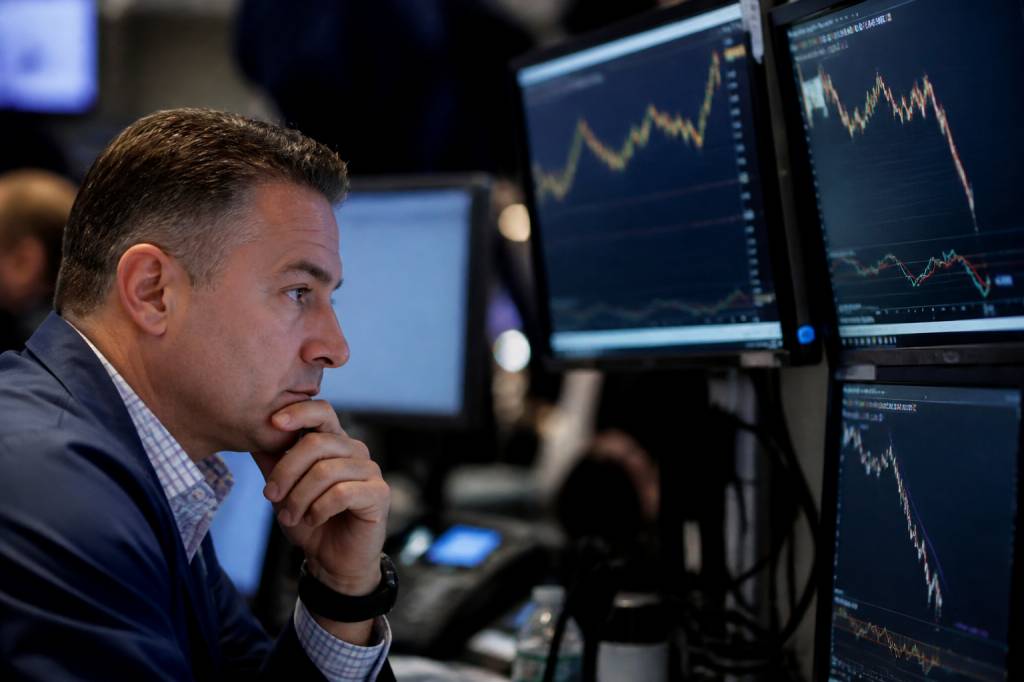
The 30-year Treasury bond yield is one of the most closely watched indicators in global finance. It reflects how much investors demand to lend money to the United States for three decades. That sounds like a narrow market statistic. In reality, it influences mortgage rates, corporate borrowing costs, pension funds, stock valuations, government budgets and the dollar.
For investors, the yield can signal opportunity or risk. For businesses, it changes the cost of financing long-term projects. For policymakers, it is a daily reminder that markets can challenge even the strongest sovereign borrower.
So, what does the 30-year Treasury yield actually tell us—and how should investors interpret it?
What is the 30-year Treasury bond yield?
A U.S. Treasury bond is a debt instrument issued by the federal government. When an investor buys a 30-year Treasury bond, they lend money to the U.S. government in exchange for regular interest payments and the return of the principal at maturity.
The 30-year Treasury yield is the annual return investors expect to receive if they hold the bond until maturity, assuming the government makes all scheduled payments. It is expressed as a percentage.
For example, if the 30-year yield is 4.5%, a newly issued bond may offer an annual coupon close to that level. Existing bonds, however, may carry different coupons. Their market prices adjust so that their effective yield becomes competitive with newly issued debt.
This creates a basic but essential relationship:
- When bond prices rise, yields fall.
- When bond prices fall, yields rise.
That inverse relationship explains why a strong sell-off in long-term Treasury bonds can push the 30-year yield sharply higher—even if the Federal Reserve has not changed its policy rate.
Why the 30-year yield matters more than a simple interest rate
The Federal Reserve directly controls the federal funds rate, which affects very short-term borrowing. The 30-year Treasury yield is different. It is determined by market expectations and several long-term forces.
Investors typically consider:
- Expected inflation over the next several decades.
- Future economic growth.
- The likely path of Federal Reserve interest rates.
- The amount of Treasury debt the government must issue.
- Demand from pension funds, insurers, banks and foreign investors.
- The compensation required for holding a long-duration asset.
This is why the 30-year yield is often described as a market-based measure of long-term borrowing costs. It is not a perfect forecast, but it incorporates the collective judgment of thousands of investors, institutions and trading algorithms.
In practical terms, the yield answers a difficult question: how expensive will it be to borrow money for a generation?
The link with inflation and economic growth
Inflation is one of the most important drivers of long-term Treasury yields. Investors who lend money for 30 years want to preserve their purchasing power. If they expect prices to rise rapidly, they will demand a higher yield.
Suppose an investor buys a bond yielding 3% while inflation averages 4% over time. The nominal return may look positive, but the real purchasing power of that return is declining. Investors therefore tend to demand higher yields when inflation expectations increase.
Economic growth also matters. A stronger economy can produce higher corporate profits, greater demand for capital and more pressure on interest rates. In that environment, long-term yields may rise even if inflation remains relatively contained.
Conversely, weak growth often encourages investors to seek the relative safety of government bonds. Strong demand pushes bond prices up and yields down. This pattern was visible during several periods of economic uncertainty, when investors accepted lower returns in exchange for protection and liquidity.
The key point is that a rising 30-year yield is not automatically bad news. It may reflect healthy growth and confidence in future economic activity. It becomes more problematic when it rises because of persistent inflation, fiscal concerns or a sudden loss of market confidence.
Why the yield can rise even when the Fed cuts rates
This is one of the most confusing features of the bond market. The Federal Reserve can reduce short-term interest rates while the 30-year Treasury yield moves higher.
Why? Because markets look forward.
A rate cut may suggest that the Fed wants to support the economy. But investors could simultaneously expect:
- Higher inflation in the years ahead.
- Larger government deficits.
- More Treasury issuance.
- Stronger economic growth than previously anticipated.
- Less demand from traditional Treasury buyers.
In such a scenario, short-term rates fall while long-term yields rise. The yield curve can steepen, meaning the difference between long-term and short-term yields becomes larger.
This divergence matters for investors. Looking only at the Fed’s latest announcement is not enough. The 30-year market is pricing a much longer economic story.
What a higher 30-year yield means for investors
A higher yield has both positive and negative effects, depending on the investor’s position and time horizon.
For new bond buyers, higher yields can be attractive. Investors can lock in a larger nominal income for decades. Pension funds and insurance companies, which need long-term assets to match future liabilities, may welcome the opportunity.
For existing bondholders, higher yields usually mean lower prices. Long-term bonds are particularly sensitive to changes in interest rates. A bond paying a fixed coupon becomes less attractive when newly issued securities offer better returns.
This sensitivity is measured through duration. A 30-year Treasury bond has substantial duration risk: even a modest change in yields can produce a significant change in its market value.
For example, a portfolio holding long-duration Treasury funds may suffer a notable decline if the 30-year yield rises by one percentage point. The eventual repayment of principal remains intact if the investor holds the bond to maturity, but the market value can fall sharply in the meantime.
This distinction is critical. A bond fund does not have the same maturity certainty as an individual Treasury bond held until maturity. Fund investors remain exposed to daily price movements and portfolio turnover.
Impact on stocks and company valuations
The 30-year Treasury yield is widely used as a benchmark for valuing financial assets. Investors often compare the expected return from stocks with the “risk-free” return available from Treasuries.
When long-term Treasury yields rise, the discount rate used to value future corporate cash flows also tends to increase. This can put pressure on stock prices, particularly for companies whose profits are expected far in the future.
Technology and growth stocks are often more sensitive because a large portion of their valuation depends on earnings projected years ahead. Higher discount rates reduce the present value of those future earnings.
By contrast, mature companies with strong current cash flows, pricing power and reliable dividends may prove more resilient. Financial institutions can also benefit in certain circumstances, although the impact depends on the shape of the yield curve, credit conditions and the quality of their balance sheets.
A useful rule of thumb is simple: the longer the wait for an investment’s expected cash flows, the more vulnerable its valuation may be to higher long-term yields.
Consequences for mortgages and real estate
The 30-year Treasury yield does not directly set the rate on a 30-year fixed mortgage. However, it is an important reference point for mortgage pricing.
Lenders typically price mortgages by adding a spread to comparable Treasury yields. That spread compensates them for credit risk, prepayment risk, operating costs and market volatility. When the 30-year Treasury yield rises, mortgage rates often move in the same direction.
The consequences can spread quickly through the housing market:
- Monthly payments become more expensive for new buyers.
- Affordability declines unless home prices adjust.
- Refinancing activity weakens.
- Homeowners with very low existing mortgage rates become less willing to move.
- Residential construction and commercial real estate projects face higher financing costs.
Consider a borrower taking out a $400,000 mortgage. A difference of two percentage points in the interest rate can add hundreds of dollars to the monthly payment and tens of thousands of dollars over the life of the loan. The bond market may seem distant, but its effects reach household budgets very quickly.
The effect on the U.S. government and taxpayers
The United States regularly refinances maturing debt and issues new bonds to finance government spending. When long-term yields rise, the cost of servicing that debt increases over time.
The impact is not immediate across the entire debt stock because existing bonds retain their original interest rates until maturity. But as older, cheaper debt is replaced with new debt carrying higher yields, interest expenses grow.
This can create a difficult policy trade-off. Higher interest costs may require:
- Reduced spending in other areas.
- Higher taxes or new revenue measures.
- Additional borrowing.
- Greater scrutiny of government programs.
Additional borrowing can, in turn, increase Treasury supply and place further upward pressure on yields if demand does not keep pace. This is not an automatic spiral, but it is a risk that markets monitor closely.
For companies, the mechanism is familiar. A heavily indebted government also has to manage refinancing costs. The scale is different, but the arithmetic is not.
How investors can use the 30-year yield
The yield should not be treated as a standalone buy-or-sell signal. It is more useful as part of a broader framework.
Investors can ask four practical questions:
- Is the yield rising because of stronger growth or higher inflation expectations?
- Is the move gradual, or is it occurring in a disorderly market sell-off?
- How exposed is the portfolio to long-duration assets?
- Does the current yield compensate adequately for inflation and interest-rate risk?
Some investors use individual Treasury bonds to lock in a known maturity value, assuming they can hold until maturity. Others prefer Treasury funds or exchange-traded funds for liquidity and diversification, accepting that prices will fluctuate.
A laddered strategy—buying bonds with different maturity dates—can reduce the risk of investing everything at one point in the rate cycle. When bonds mature, the proceeds can be reinvested at prevailing yields.
There is no universal solution. A retiree seeking predictable income has different needs from a young investor building a long-term growth portfolio. The same 30-year yield can represent an opportunity for one and a warning signal for another.
Three scenarios to watch
Scenario one: yields rise because of stronger growth. This may be uncomfortable for bonds, but corporate earnings could benefit. Stock market performance would depend on whether profit growth offsets higher discount rates.
Scenario two: yields rise because of inflation or fiscal anxiety. This is more challenging. Bonds lose value, equity valuations face pressure and borrowing costs increase for households, companies and the government.
Scenario three: yields fall because of economic weakness. Existing long-duration bonds may perform well as investors seek safety. However, equities linked to cyclical growth, employment and consumer spending could weaken.
Markets rarely fit neatly into one category. Growth, inflation, debt issuance and global demand can change simultaneously. That is why observing the direction of the yield is less useful than understanding the reason behind the move.
A long-term indicator with immediate consequences
The 30-year Treasury yield compresses several major economic forces into one number: inflation expectations, growth prospects, fiscal policy, central-bank credibility and investor demand for safety.
For investors, it helps determine whether long-term bonds offer attractive income and how vulnerable portfolios may be to duration risk. For businesses, it influences the cost of financing acquisitions, factories, technology infrastructure and real estate. For households, it often feeds into mortgage rates. For governments, it affects the long-term price of borrowing.
The most useful approach is therefore neither to celebrate a high yield nor to fear it automatically. Track the level, the speed of the move and the forces driving it. A yield chart tells you what the market is doing. Economic data and policy analysis help explain why.
In a financial system built on long-term promises, the 30-year Treasury yield is one of the clearest indicators of how expensive those promises have become.