


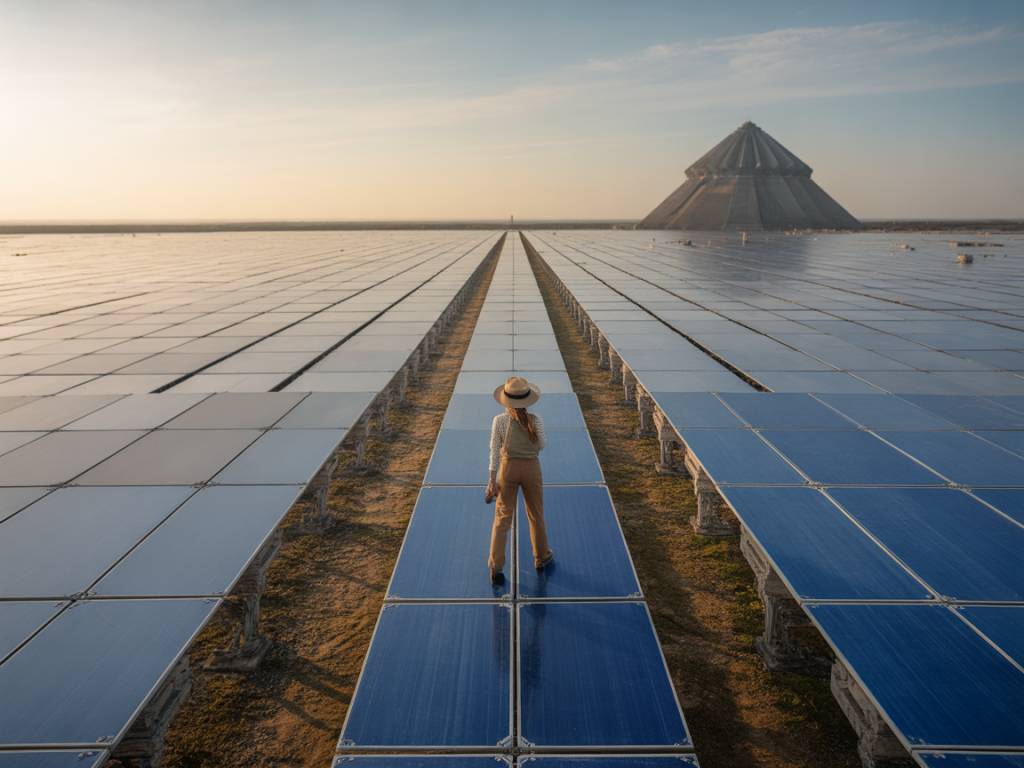
Europe’s climate transition is no longer a matter of distant pledges and glossy roadmaps. It is an industrial, financial and technological battle being fought now, gigafactory by gigafactory, regulation by regulation, pilot project by pilot project. For investors and policymakers, the question is no longer “if” climate tech will reshape the economy, but “who” is already building the next layer of critical infrastructure.
Below are ten European start-ups and scale-ups that, each in their segment, give a fairly concrete preview of this new industrial landscape. They are not the only ones to watch, but they tick three essential boxes: technological depth, alignment with EU climate priorities, and a business model that can scale beyond subsidies.
Why these start-ups matter for the climate transition
Before diving into the list, two points are worth framing:
- They operate in “hard” parts of the transition: heavy industry, energy storage, carbon removal, buildings, grid flexibility. These are the sectors where Europe either wins now or imports its solutions later.
- They sit at the intersection of public policy and private capital: most of them rely on combinations of equity, project finance, and public support (IPCEI schemes, green bonds, contracts for difference, etc.). Their success or failure is a live stress test of European industrial policy.
With that in mind, here are ten companies that serious climate-focused investors and European policymakers should keep high on their radar.
Northvolt – Building Europe’s battery backbone
Based in Sweden, Northvolt has become the de facto flagship of Europe’s battery ambitions. Founded in 2016, the company is building a network of gigafactories to supply lithium-ion batteries for electric vehicles and stationary storage, with a strong focus on low-carbon manufacturing.
Why it matters:
- Strategic autonomy: Europe currently depends heavily on Asian suppliers for batteries. Northvolt’s targets run into the tens of gigawatt-hours per year, directly supporting the EU’s industrial and security agenda.
- Low-carbon manufacturing: using primarily hydropower in Sweden, Northvolt claims significantly lower lifecycle CO₂ emissions per kWh of battery than many competitors.
- Anchored in real demand: long-term supply contracts with Volkswagen, BMW and others provide revenue visibility that many climate start-ups lack.
For investors, Northvolt is no longer an early-stage bet but an industrial scale-up with capital needs measured in the billions. For policymakers, it is a concrete test of whether Europe can still build heavy manufacturing fast enough in the face of US and Asian competition.
H2 Green Steel – Decarbonising heavy industry at scale
If you want to know whether Europe can decarbonise its steel sector without offshoring jobs, follow H2 Green Steel. The Swedish company is building a large-scale plant in Boden, aiming to produce steel with up to 95% lower CO₂ emissions compared to traditional blast furnaces, by using green hydrogen instead of coal.
Why it matters:
- High-emission sector: steel is responsible for roughly 7–8% of global CO₂ emissions. A viable low-carbon pathway here changes the global equation.
- Hydrogen as an industrial feedstock: beyond the hype, H2 Green Steel is a real-world application for green hydrogen in a hard-to-abate sector.
- Project finance innovation: the company has attracted a mix of equity, loans and guarantees from both private investors and public institutions, creating a template for future industrial decarbonisation projects.
For regulators, this project raises key questions: how to price carbon so that green steel can compete, how to design contracts for difference, and how to ensure sufficient renewable power for hydrogen production without destabilising local grids.
Climeworks – Making carbon removal tangible
Switzerland’s Climeworks is one of the global pioneers of direct air capture (DAC), a technology that captures CO₂ directly from ambient air for permanent storage underground. The company operates plants in Iceland and is scaling up with new facilities designed to capture tens of thousands of tonnes of CO₂ per year.
Why it matters:
- Beyond “net zero” slogans: most credible 1.5°C and 2°C scenarios include some level of carbon removal. Climeworks is turning that from an abstract model assumption into actual infrastructure.
- Corporate demand signal: long-term offtake agreements with companies like Microsoft and Stripe signal that a voluntary market for high-quality removals is forming, even at high initial prices per tonne.
- Policy learning curve: DAC forces regulators to confront complex questions: how to account for removals in national inventories, how to avoid double counting, and how to set quality standards.
For investors, Climeworks is a high-risk, long-duration play on a future market that does not yet fully exist. For policymakers, it is an early testing ground for standards and governance in the nascent CDR (carbon dioxide removal) sector.
Enpal – Solar and storage for the “subscription” generation
Germany’s Enpal attacks one of the most stubborn bottlenecks in residential solar: friction. Instead of asking households to pay upfront for panels and storage, Enpal offers solar, batteries and energy management as a service, via long-term leasing contracts.
Why it matters:
- Speed of deployment: Europe cannot rely on utility-scale projects alone. Distributed solar needs to scale fast, and Enpal’s simplified, fully-financed offer directly addresses that need.
- Energy poverty and inclusion: by spreading costs over time, the model can open access to lower-income households that cannot finance large upfront investments.
- Grid interaction: with enough penetration, a portfolio of smartly controlled home systems becomes a virtual power plant that can support grid stability.
For public authorities, the Enpal model raises regulatory questions around consumer protection, standardisation of contracts, and how to integrate such fleets into flexibility markets. For investors, it is an asset-heavy but highly recurring revenue model, very different from pure software plays yet strongly tied to the energy transition.
Aira – Heat pumps as a consumer product, not a niche technology
Also born in Sweden, Aira focuses on one of Europe’s biggest, yet often overlooked, climate challenges: decarbonising residential heating. The company offers heat pumps through a “pay-monthly” model, bundling hardware, installation, maintenance and digital optimisation.
Why it matters:
- High impact segment: heating and cooling account for a large share of residential emissions in Europe, still dominated by gas and oil boilers.
- Industrial and service angle: Aira combines industrial-scale manufacturing ambitions with a strong service and software layer, aligning with the EU’s drive to build a competitive heat-pump ecosystem.
- Policy alignment: upcoming bans on new fossil boilers in several countries and rising carbon prices create a strong structural tailwind.
For policymakers, companies like Aira test whether subsidies and building regulations are clear and stable enough to unlock private capital at scale. For investors, the opportunity lies in a massive, relatively predictable replacement market, provided logistics and installation capacity can keep up.
Verkor – France’s bet on low-carbon batteries
Verkor, headquartered in France, is another pivotal player in Europe’s battery race. With a gigafactory project in Dunkirk and strong industrial partnerships (notably with Renault), the company aims to produce high-performance, low-carbon batteries for EVs and stationary storage.
Why it matters:
- Strategic clustering: the Dunkirk region is emerging as a battery and clean-tech cluster, illustrating how local industrial policy and EU priorities can reinforce each other.
- Public–private leverage: Verkor has secured substantial support from the French state and EU mechanisms, acting as a multiplier for private capital.
- Supply chain localisation: the project contributes to shorter, more transparent battery supply chains in Europe, a priority for both environmental and geopolitical reasons.
Verkor is a clear case where investors need to understand not just technology and markets, but also state aid rules, permitting processes and the evolving taxonomy of what counts as “green” under EU law.
Skeleton Technologies – Unlocking fast, durable energy storage
Estonian–German company Skeleton Technologies focuses on a specific but crucial piece of the energy puzzle: high-power, fast-charging energy storage through ultracapacitors and hybrid systems. Their graphene-based technology targets applications where traditional batteries struggle, such as rapid charging, peak shaving and high-cycling industrial uses.
Why it matters:
- Grid stability and flexibility: as renewables scale, the grid needs fast-response assets. Ultracapacitors excel in frequency regulation and peak management.
- Industrial decarbonisation: applications in heavy transport, manufacturing and rail can deliver emissions cuts while improving performance and reliability.
- European IP: Skeleton’s technology is based on European R&D, helping keep key intellectual property and manufacturing know-how within the region.
For policymakers, Skeleton is an example of why energy storage policy cannot be reduced to lithium-ion batteries alone. For investors, it represents a differentiated bet on niches that could become systemic as electrification deepens.
Tibber – Turning households into active grid participants
Norwegian–Swedish start-up Tibber operates as a digital electricity supplier with a twist: rather than focusing on margins per kilowatt-hour, it uses real-time pricing, automation and connected devices to help customers shift consumption when power is cheapest and cleanest.
Why it matters:
- Demand-side flexibility: the simplest way to balance a renewable-heavy grid is often to adjust demand, not supply. Tibber operationalises this at the household level.
- Data-driven retail: by treating energy as a software problem, Tibber challenges traditional utilities and their legacy billing models.
- EV and home integration: smart charging of electric vehicles and control of heat pumps or heaters can create significant system-level benefits.
This is exactly the type of player that tests whether regulations allow innovative tariffs, data portability and demand response participation. For investors, Tibber sits at the intersection of fintech-like customer acquisition and infrastructure-like retention, with climate impact as a by-product of better incentives.
Plan A – Decarbonisation software for the corporate middle market
Berlin-based Plan A tackles a less visible but decisive layer of the transition: helping companies measure, manage and reduce their emissions, beyond simple offsetting. Its software platform combines carbon accounting, regulatory alignment (notably with EU CSRD/ESG requirements) and decarbonisation roadmapping.
Why it matters:
- From reporting to action: many firms are now obliged to report emissions, but struggle to convert that into operational change. Plan A aims to bridge that gap.
- Regulatory tailwinds: European disclosure rules are tightening. Tools that help companies comply and move faster than the minimum can gain strong traction.
- SME inclusion: large corporates have the resources to build internal sustainability teams; mid-sized companies often do not. SaaS platforms can democratise access to expertise.
For policymakers, the proliferation of such tools raises questions around standardisation, interoperability and auditability of climate-related data. For investors, this is one of the more “classic” venture profiles in climate tech: recurring revenue, high gross margins, but subject to regulatory risk and the pace of corporate adoption.
Sylvera – Bringing transparency to carbon markets
London-based Sylvera specialises in rating carbon credits and climate projects, using a mixture of satellite imagery, data science and on-the-ground analysis. The goal: separate high-quality carbon projects from those that overstate their climate impact.
Why it matters:
- Integrity of climate finance: if carbon markets lack credibility, both voluntary and compliance schemes lose their purpose. Independent ratings are essential to rebuild trust.
- Policy alignment: as the EU shapes rules for voluntary carbon markets and integrates removals into its climate architecture, robust data providers become critical.
- Risk pricing: investors in nature-based solutions or CDR projects need tools to assess performance and permanence. Sylvera’s analytics provide one such layer.
For regulators, companies like Sylvera highlight the need to align emerging standards (Article 6 under the Paris Agreement, EU rules, voluntary initiatives) with what is technically measurable. Investors, meanwhile, can see it as a way to gain exposure to the carbon markets’ growth without picking individual projects.
What investors and policymakers can do with these signals
Looking across these ten start-ups, a few patterns emerge that are directly actionable.
- Prioritise “infrastructure-grade” climate tech: from batteries and steel to heat pumps and DAC, the transition increasingly depends on assets measured in megawatts and kilotonnes, not just downloads and MAUs. Investors need capabilities in project finance and industrial risk, not only venture capital.
- Design policies around scale, not pilots: most of these companies have moved beyond the proof-of-concept phase. What matters now is permitting speed, grid connections, carbon pricing stability and coherent subsidy frameworks that reward actual emissions reductions.
- Encourage ecosystem thinking: batteries do not exist in a vacuum; they depend on mining, recycling, power grids and carmakers. Carbon removal needs storage sites, accounting rules and buyers. Policymakers and investors should evaluate not just individual start-ups but the ecosystems they create or rely on.
- Use public capital as a lever, not a crutch: almost all of these players benefit from some form of public support. The challenge is to design instruments that de-risk early stages and crowd in private investment, instead of creating long-term dependency.
Europe’s climate transition will not be driven by a handful of unicorns magically decarbonising entire sectors. It will come from hundreds of specialised companies like the ones above, each solving a precise problem in energy, industry, buildings, mobility or finance, and each navigating a dense web of regulations, standards and infrastructure constraints.
For investors, the opportunity is to identify the teams and technologies that can turn today’s policy targets into tomorrow’s cash flows. For policymakers, the challenge is to build a stable, predictable framework where such companies can scale faster in Europe than anywhere else. The start-ups highlighted here offer a useful dashboard: track how they grow, where they stumble, and which countries manage to attract their factories, pilots and talent. The answers will say a lot about where the real centres of gravity of the European climate transition are emerging.